How to Protect Your Property: Erosion Control Solutions for Sloped Yards
What if a single storm washed away your backyard slope? Soil slides down, plants uproot, and your home's foundation faces threats. This kind of damage from erosion can cost thousands to fix. Erosion happens when water or wind moves soil from one spot to another. In sloped yards, it often leads to lost topsoil, ugly bare patches, and even structural risks.
Heavy rains or quick snow melts speed up the problem. Areas with lots of rain get hit hard. You need to act fast to stop erosion before it worsens. These steps can save your yard and keep your property safe. Let's look at ways to fight back.
Understanding Slope Erosion Dynamics
Why Slopes are Highly Vulnerable to Water Runoff
Water runs downhill fast on slopes. Gravity pulls it along, building speed and force. This rush knocks loose soil particles free.
Soil type matters a lot. Sandy soil shifts easily under water's push. Clay holds tighter but cracks when dry. The steeper the slope, the quicker water flows. A 20% grade can double runoff speed compared to flat ground.
Vegetation slows things down. Bare spots let water carve paths unchecked. Roots grip soil like anchors in a storm. Check your yard's angle and cover to spot weak points.
Identifying the Different Types of Erosion
Erosion shows up in clear ways on slopes. You can learn to spot early signs. This helps you pick the right fix.
Sheet Erosion and Rill Formation
Sheet erosion strips a thin layer of soil across the whole area. Rain falls evenly and washes it away bit by bit. Over time, you lose the nutrient-rich top layer that plants need.
Rills form next. Water digs small grooves, like tiny streams. They start shallow but deepen with each rain. Walk your slope after a shower. Look for these lines—they signal trouble ahead.
Gully Erosion and Mass Wasting
Gullies cut deep channels into the earth. Water focuses in one path, carving out chunks of soil. These can grow wide and tall, up to several feet.
Mass wasting takes it further. The whole slope might slump or slide. Wet soil loses strength, like wet sand in your hand. Steep sites over 30% grade face this risk most. It can damage fences or patios nearby.
Vegetation-Based Erosion Control Methods
The Power of Deep-Rooted Plantings
Plants fight erosion best with strong roots. They weave through soil, holding it in place. Deep roots reach far to bind loose dirt.
Choose natives that fit your climate. Vetiver grass sends roots down six feet. It thrives in wet spots and stops water's pull. Creeping juniper covers ground while gripping soil tight. Ferns work well in shady areas.
Plant in rows along the slope's top. Space them close for quick cover. Water new plants well at first. In a year, roots will form a net against runoff.
- Pick grasses like switchgrass for sunny slopes.
- Use shrubs such as sumac for medium heights.
- Add groundcovers like wild ginger for low spots.
This method costs little and looks natural.
Implementing Erosion Control Blankets and Mats
Blankets give quick cover after you seed or dig. They shield soil from rain's first hits. Over time, plants grow through them.
These mats last one to three years. They break down into the earth. Use them on fresh slopes to hold seeds in place.
Types and Installation of Biodegradable Materials
Coir mats come from coconut husks. They soak up water and let air through. Straw blankets use wheat or rice remains. Wood fiber ones mix excelsior with netting.
To install, follow these steps:
- Clear weeds and rocks from the slope.
- Lay the blanket downhill, overlapping edges by six inches.
- Stake it every two feet with wooden pins.
- Seed through gaps if needed.
- Mulch edges to keep them down.
Anchor well on steep parts. This setup cuts erosion by 90% in early storms, per yard studies.
Strategic Lawn and Turf Management on Slopes
Lawns can help or hurt slopes. Short grass lets water rush through. Tall blades catch drops and slow flow.
Mow high, around three inches. It shades soil and boosts root depth. Fescue grass roots go deep, up to two feet. Avoid Kentucky bluegrass—it stays shallow.
Aerate yearly to let water soak in. Overseed bare spots each fall. This builds a thick turf mat. Your slope will stay green and stable.
Think twice about full lawns on very steep grades. Mix in groundcovers for better hold.
Need Expert Grading?
Our team specializes in stabilizing sloped yards with professional
land grading and
erosion control.
Hardscaping and Structural Erosion Solutions
Utilizing Retaining Walls for Slope Stabilization
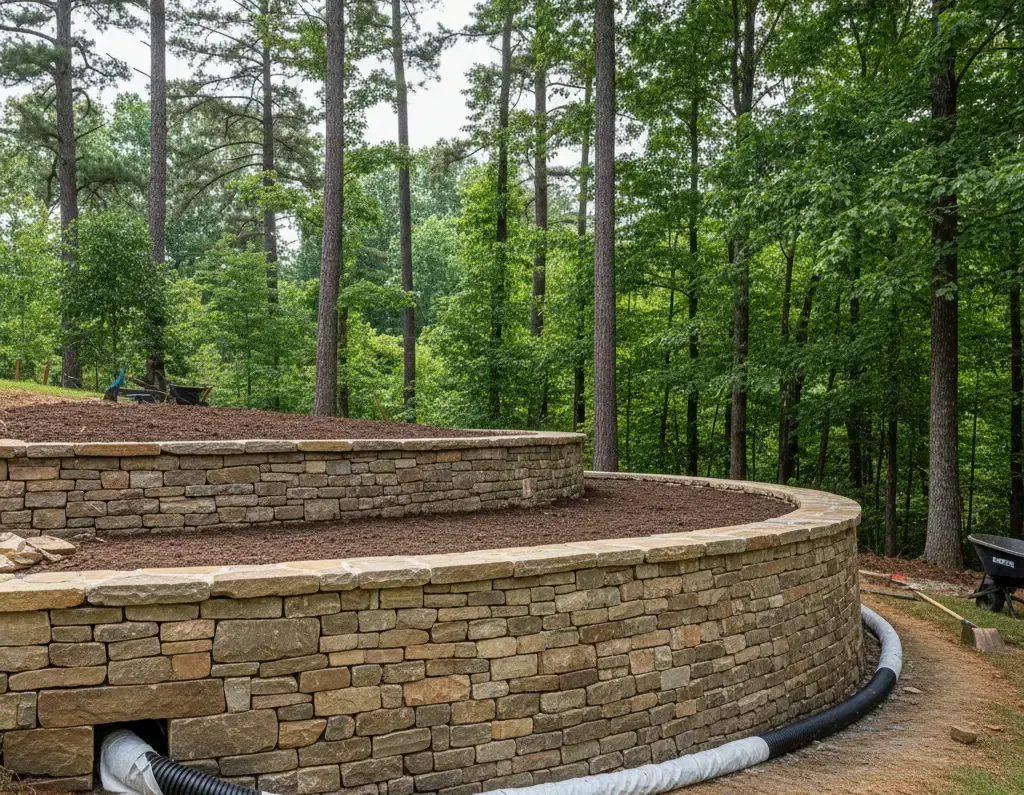
Retaining walls hold back soil on changes in level. They fight water pressure building behind them. Good walls last decades with little upkeep.
Segmented blocks stack like Legos. Each piece locks to the next. They work on slopes up to 10 feet high. Gravity walls use sheer weight, best for shorter drops.
Hire a pro for tall ones. Poor drainage behind causes cracks. Add weep holes to let water escape. One study shows these walls reduce slope movement by 80%.
Terracing Systems: Redefining Steep Grades
Terraces turn a steep drop into flat steps. Each level slows water's rush. It spreads out like stairs on a hill.
Build risers with stone for looks and strength. Timber works for short runs but rots over time. Gabion baskets fill with rocks— they let water drain while holding soil.
Start at the bottom. Level each terrace six inches high. Backfill with good soil for plants. This setup cuts runoff speed in half.
- Stone terraces suit dry areas.
- Wood fits wooded yards.
- Gabions blend with rocks.
Your yard becomes usable and safe.
Check Dams and Berms to Manage Water Flow
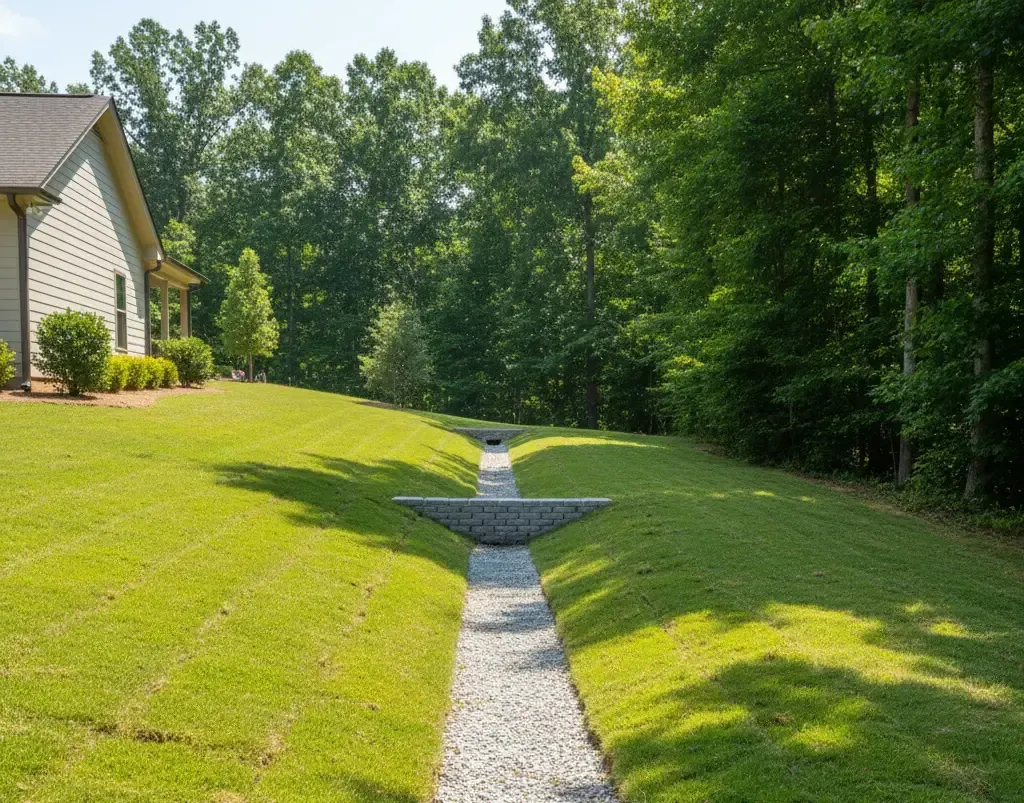
Check dams block small gullies. They slow water to drop sediment. Berms are low mounds that divert flow.
Stack stones for a dam. Place them across the path, key into soil. Every 20 feet on a gully works best. Landscape timbers treat with sealant for wood dams.
For berms, pile earth along the side. Plant grass on top. Geotextile fabric under strengthens them.
Build one after rain to test. Adjust as needed. These simple fixes stop rills from growing.
Water Diversion and Surface Management Techniques
Redirecting Runoff Away from Vulnerable Areas
Keep water off the slope's face. Guide it to safe spots first. This cuts erosion at the source.
Roof water often starts the flow. Extend it far from the base. Pipes or channels work.
Proper Gutter and Downspout Extensions
Gutters catch rain from your house. Downspouts drop it straight down. Extend them 10 feet out with PVC pipe.
Use splash blocks at ends. They spread water gently. Aim toward flat yards or storm drains. In wet areas, connect to a rain barrel.
Check yearly for clogs. Clean leaves to keep flow smooth. This one change protects slopes below.
Permeable Paving Solutions for Access Areas
Paths and drives on slopes shed water fast. Permeable options let it sink in. No big puddles form.
Gravel grids hold stones in place. Water filters through gaps. Permeable pavers snap together like tiles. Decomposed granite packs tight but breathes.
Install over a sand base. Compact it well. Edge with metal strips. These surfaces cut runoff by 70%, says environmental data.
Choose for walkways. They look clean and work.
Grading and Swales: Engineered Water Paths
Grade the slope to steer water. Swales are shallow ditches lined with plants. They carry runoff slow and safe.
Shape them V-like, one foot deep. Line with grass or rocks. Slope them one percent to a drain point.
Outslope away from your house. This keeps foundations dry. Pros use levels for precision.
Add mulch in swales. It slows water more. Direct to curbs or soak pits.
A Proactive Approach to Landscape Longevity
Erosion control mixes plants, walls, and water guides. Each method builds on the last for strong defense. Your sloped yard stays pretty and solid.
Assess your site now. Walk it after rain. Note bare spots or gullies.
Layer solutions for best results. A wall with deep plants works wonders. Tailor to your slope's needs.
Pick what fits your yard. Start small if needed. You'll enjoy a lasting landscape.
Stop Erosion for Good
Schedule a free, on-site assessment with our West Atlanta experts to protect your property.