How Forestry Mulching Clears Land Without Hauling Debris
Wooded and overgrown property can feel difficult to use. Thick brush, small trees, vines, and leftover storm growth can block access, hide uneven ground, and make it hard to picture what the land could become.
For many landowners in Carrollton, GA, the first concern is what happens to all that debris. Traditional land clearing often means cutting, piling, loading, hauling, and disposing of material. That can add time, mess, and extra equipment to the project.
Forestry mulching offers a cleaner way to reclaim overgrown land. Instead of hauling away brush and vegetation, the machine grinds it into mulch right where it stands. The result is a more usable property surface with less disruption and a natural mulch layer left behind.
What Makes Forestry Mulching Different From Traditional Land Clearing?
Traditional land clearing usually separates cutting from cleanup. Crews may remove trees and brush, stack debris, load it into trucks, and haul it away. On some properties, that approach makes sense, especially when large timber, heavy excavation, or major site changes are involved.
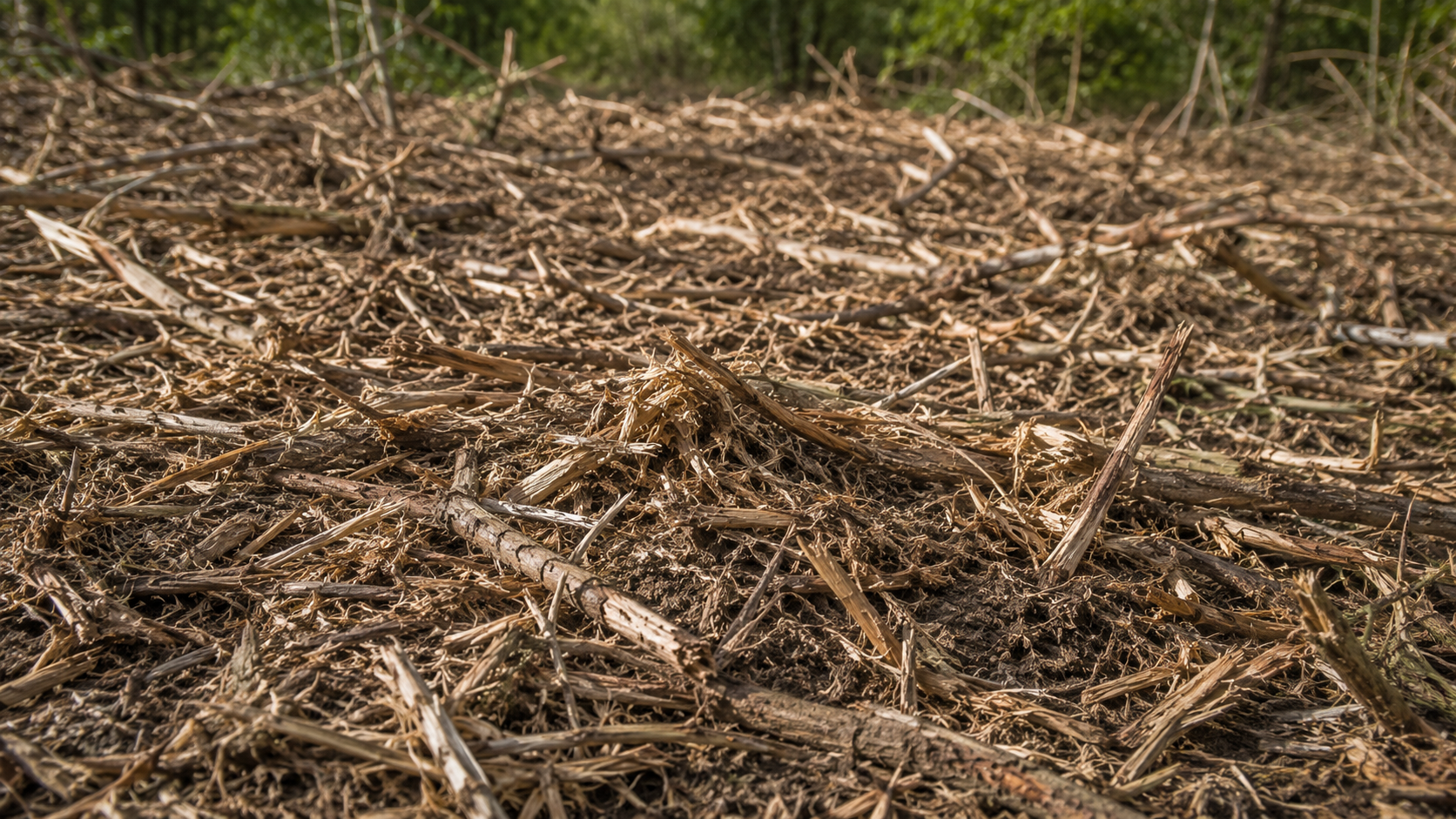
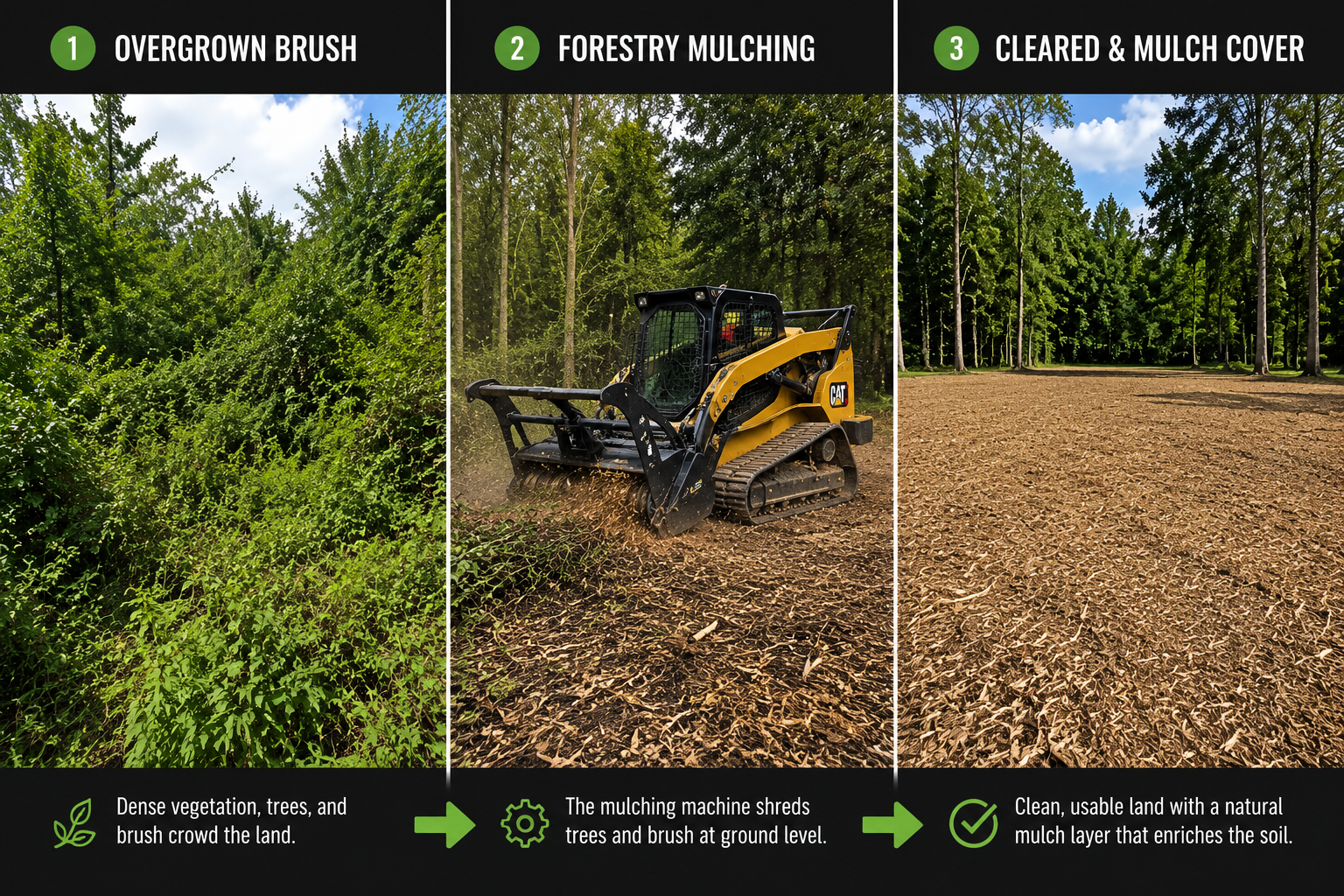
Forestry mulching works differently. A specialized machine cuts and grinds vegetation in place. Brush, saplings, small trees, and undergrowth are reduced into mulch during the clearing process.
That means fewer debris piles and less need for hauling. It also keeps more organic material on the property, where it can help protect the soil.
Landowners who need forestry mulching in Carrollton, GA often choose it because it is practical for wooded lots, trails, pasture edges, fence lines, and overgrown acreage.
Why the Mulch Layer Matters
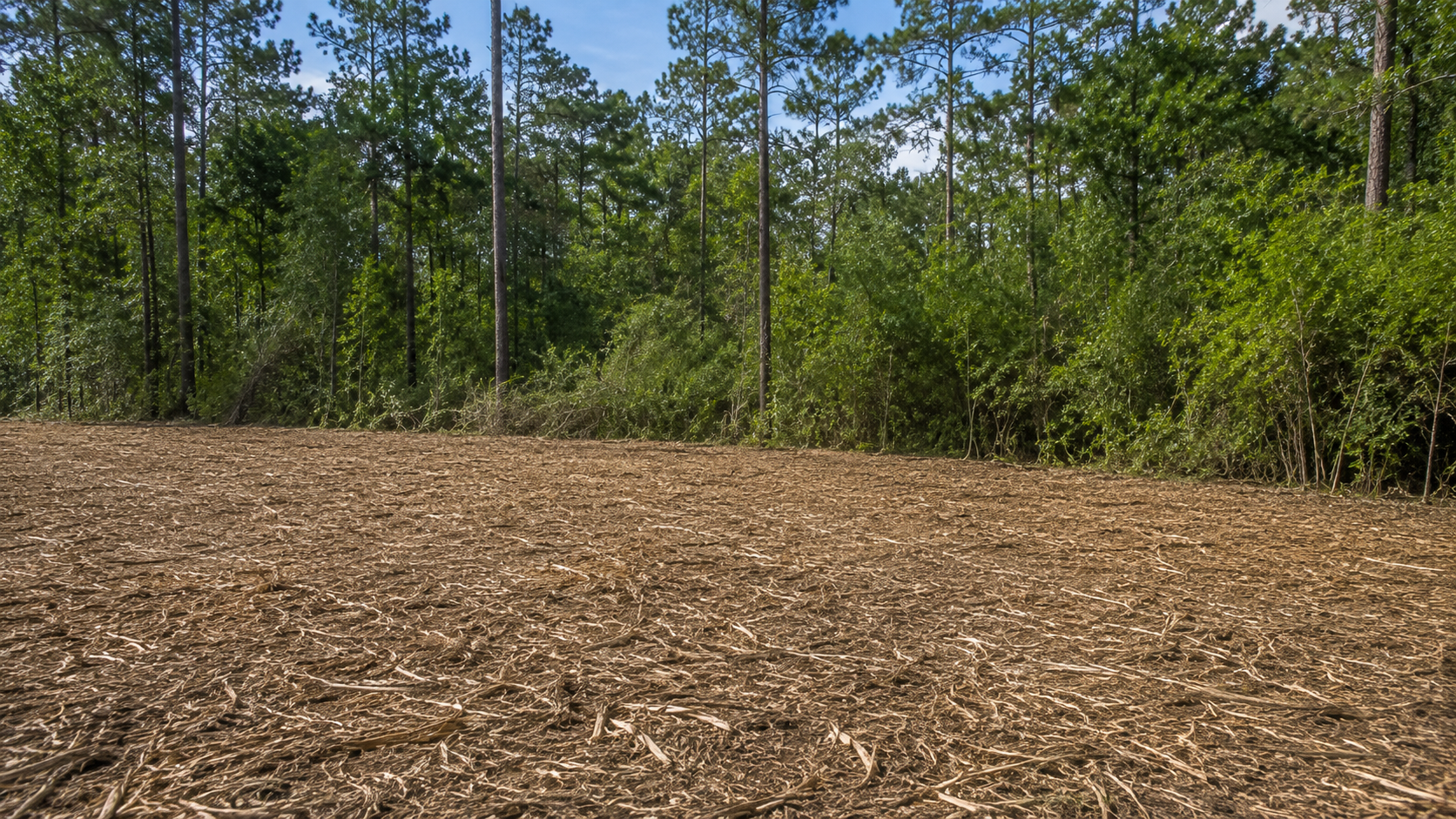
The mulch left behind is not just waste. It creates a protective ground cover that can help reduce exposed soil, limit mud, and slow erosion after clearing.
This is especially helpful on properties with slopes, soft ground, or areas that would be damaged by repeated hauling. Instead of stripping the land bare, mulch clearing leaves a more stable surface behind.
What Forestry Mulching Can Usually Clear
Forestry mulching is commonly used for brush clearing, saplings, invasive growth, small trees, vines, and dense undergrowth. It is useful when the goal is to open up land without fully excavating or reshaping the entire site.
Larger trees, stumps, and certain site conditions may need a different approach. That is why a property evaluation is important before work begins.
How Does Forestry Mulching Reduce Hauling and Cleanup?
Vegetation-Based Erosion Control Methods
The biggest advantage of forestry mulching is that the material is processed on site. The machine cuts vegetation and turns it into mulch in one pass, which reduces the need for dump trucks, burn piles, and repeated handling.
For landowners, that can mean a cleaner project area and fewer delays. There is less back-and-forth traffic across the property, and the cleared material does not need to be moved several times before the job is finished.
This approach can also be helpful on properties where access is limited. Narrow entrances, wooded driveways, wet areas, and uneven terrain can make hauling difficult. Forestry mulching can often reach areas where hauling equipment would be harder to manage.
When a property needs a heavier clearing plan, land clearing services in Carrollton, GA may be the better fit. In many cases, forestry mulching and land clearing can work together depending on the landowner’s goals.
Less Mess for the Property Owner
Hauling debris can leave ruts, compact soil, and create large disturbed areas. While some disturbance is expected with any land work, forestry mulching helps keep the process more contained.
The mulch layer also gives the property a more finished look compared to piles of brush waiting to be removed. For many owners, that makes it easier to see the next step for the land.
Fewer Disposal Concerns
Debris disposal can become a major part of a clearing job. Depending on the material, there may be hauling costs, dumping limits, or restrictions on burning.
Forestry mulching avoids many of those issues by turning vegetation into usable ground cover. It does not eliminate every site concern, but it can simplify the cleanup process.
When Is Forestry Mulching the Right Choice for Overgrown Land?
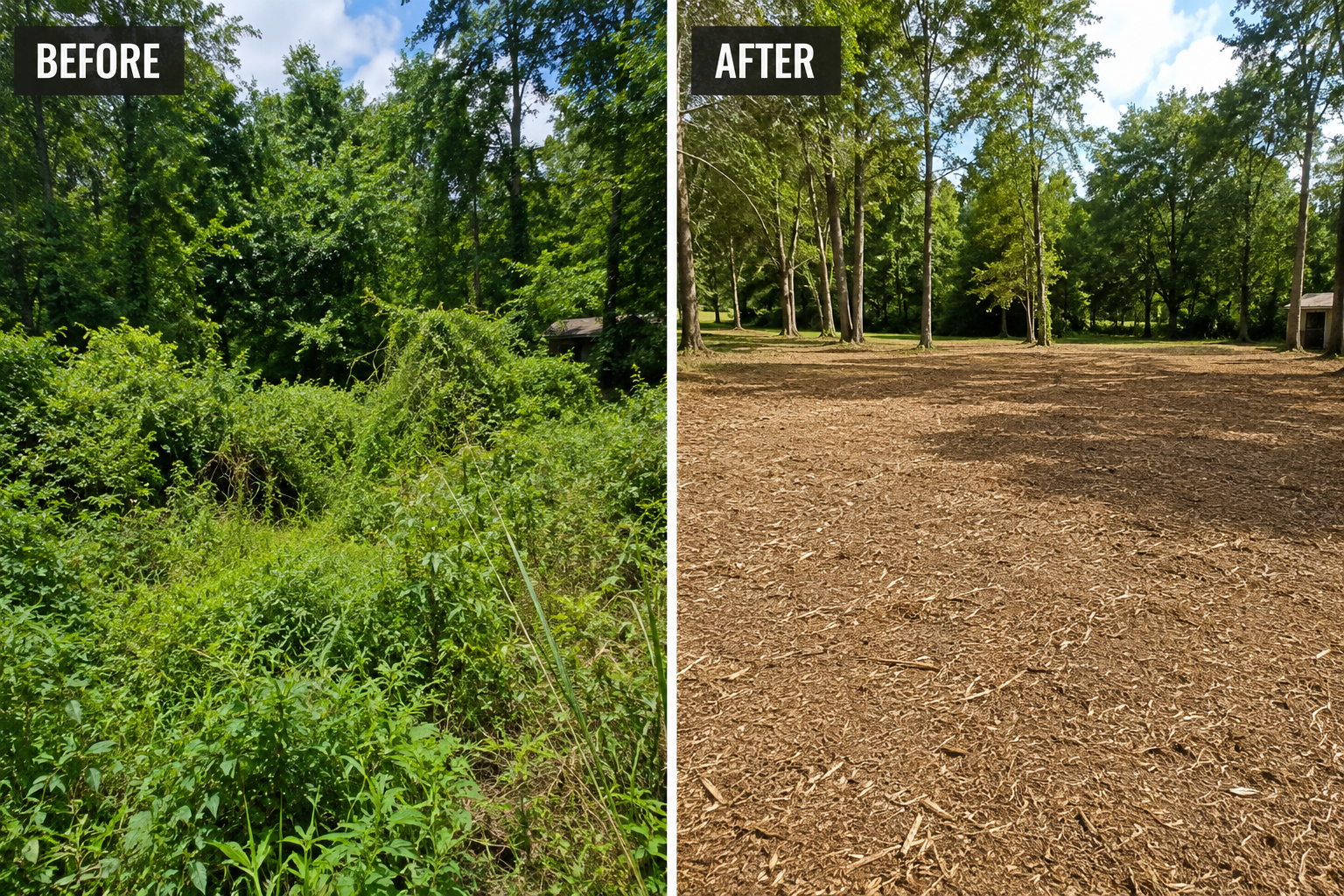
Forestry mulching is a strong option when the main goal is to reclaim overgrown property without major excavation. It is often used before fencing, trail creation, pasture expansion, hunting land improvement, or general property cleanup.
It can also help landowners maintain areas that have grown out of control over time. If brush has taken over the edges of a driveway, field, or wooded lot, mulching can open those spaces without removing all natural character from the land.
For owners preparing for a future project, forestry mulching can be the first step before site preparation services in Carrollton, GA. Clearing the vegetation first helps reveal drainage issues, slopes, low spots, and access needs.
Good Uses for Forestry Mulching
Forestry mulching is often used for brush clearing along property lines, opening wooded paths, reducing overgrowth near structures, clearing around ponds, and improving access to unused acreage.
It can also help with right of way clearing management where vegetation needs to be controlled while keeping the area manageable. The right plan depends on the size of the property, the type of growth, and how the land will be used afterward.
When Another Service May Be Needed
Forestry mulching is not always the full answer. If a property needs building pads, driveway shaping, drainage correction, or major slope adjustment, additional work may be needed.
For example, after vegetation is cleared, land grading leveling in Carrollton, GA may help create a smoother and more usable surface. Mulching clears the growth, while grading helps shape the ground.
What Should Landowners Know Before Scheduling Forestry Mulching?
Before scheduling forestry mulching, it helps to know what areas need to be cleared and what the land should be used for afterward. A pasture cleanup may need a different approach than a trail, driveway edge, or future building area.
Landowners should also consider access. Gates, narrow roads, wet spots, slopes, and underground utilities can affect how equipment moves across the property.
It is also helpful to walk the property and point out what should stay. Mature trees, boundary markers, landscape features, drainage areas, and sensitive spots should be identified before clearing begins.
Define the Goal First
The best results come from a clear goal. Some landowners want a natural wooded look with better access. Others want a cleaner open area for future use.
Knowing the goal helps the crew decide how much vegetation to remove, how closely to mulch, and whether other services may be needed after the clearing work.
Think About Long-Term Maintenance
Forestry mulching clears the current overgrowth, but vegetation can return over time. Regular maintenance may be needed to keep brush from taking over again.
For many properties, occasional mulch clearing is easier than waiting until the land becomes heavily overgrown again. A maintenance plan can save time and prevent bigger clearing needs later.
Why Forestry Mulching Makes Sense for Carrollton, GA Properties
Carrollton, GA has a mix of wooded acreage, rural homesites, pasture edges, and properties that can grow thick quickly during warm, wet seasons. Forestry mulching gives local landowners a practical way to control brush, open up land, and improve access without hauling every pile of debris off site. For properties around Carrollton, this approach can be especially useful when owners want cleaner land while keeping the soil covered and protected.
Request an Estimate for Forestry Mulching in Carrollton, GA
All Seasons Grading & Land Clearing helps landowners clear overgrown property with practical forestry mulching and land clearing solutions. To request an estimate, call 678-602-3456 and talk through what you need cleared, where the property is located, and how you plan to use the land.
Frequently Asked Questions
Does forestry mulching remove stumps?
Forestry mulching can grind vegetation close to the ground, but it does not usually remove full stumps and root systems the same way stump grinding or excavation would. If stump removal is needed, the property should be reviewed so the right service can be recommended.
Is forestry mulching better than hauling debris?
Forestry mulching can be better when the goal is to clear brush and small trees while leaving mulch on site. It reduces hauling, limits debris piles, and helps cover exposed soil. Hauling may still be needed for larger trees, trash, or materials that should not be mulched.
How long does forestry mulching take?
The timeline depends on acreage, vegetation density, access, slopes, and the type of material being cleared. A lightly overgrown area may move quickly, while thick brush or uneven ground can take longer. An on-site estimate gives the most accurate timeline.
Can forestry mulching help with erosion control?
Yes, the mulch layer can help protect soil by reducing direct exposure to rain and runoff. It is not a replacement for engineered erosion structural control for retention ponds or drainage problems, but it can support healthier ground conditions after brush clearing.
What happens to the mulch after clearing?
The mulch stays on the ground and naturally breaks down over time. It can help reduce mud, protect the soil, and give the cleared area a more finished appearance. The depth of the mulch depends on how much vegetation was processed.
Forestry mulching is a smart way to clear overgrown land without turning the job into a hauling project. For landowners in Carrollton, GA, it offers a practical path from thick brush to usable property. If your land needs attention, All Seasons Grading & Land Clearing can help you plan the right next step and request an estimate.
Need Expert Grading?
Our team specializes in stabilizing sloped yards with professional
land grading and
erosion control.
Hardscaping and Structural Erosion Solutions
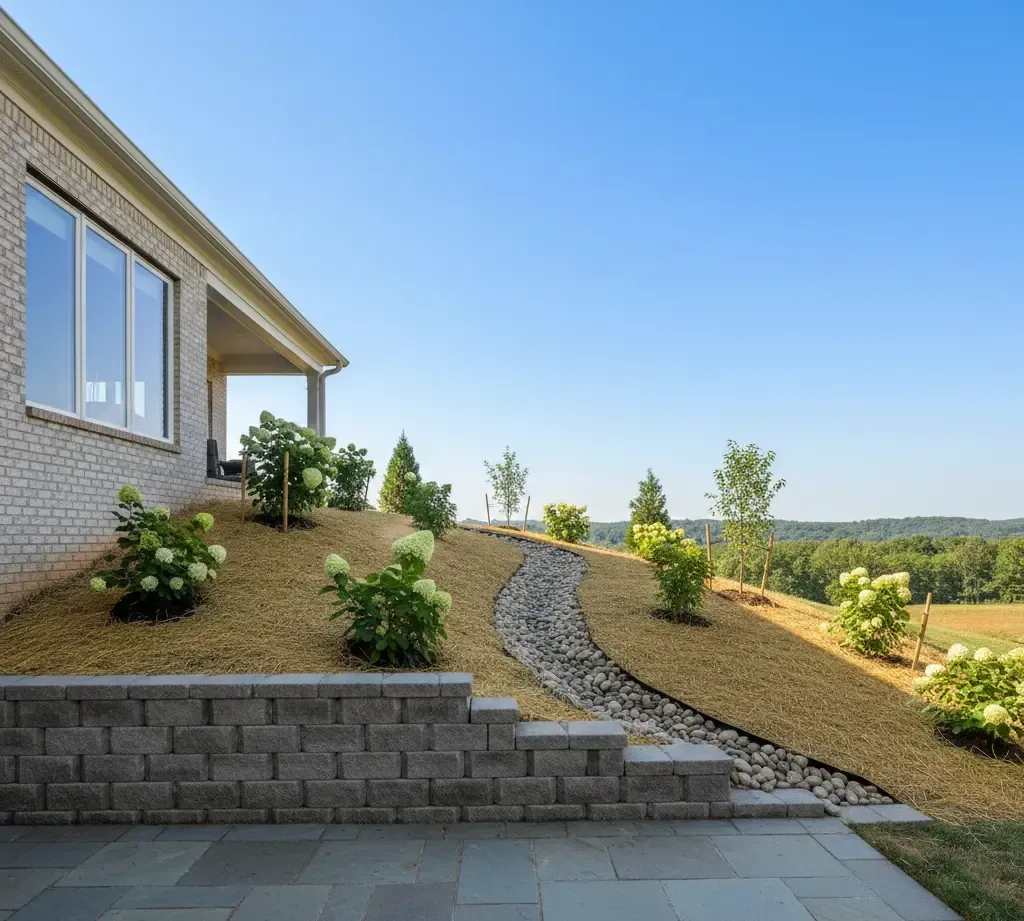
Utilizing Retaining Walls for Slope Stabilization
Retaining walls hold back soil on changes in level. They fight water pressure building behind them. Good walls last decades with little upkeep.
Segmented blocks stack like Legos. Each piece locks to the next. They work on slopes up to 10 feet high. Gravity walls use sheer weight, best for shorter drops.
Hire a pro for tall ones. Poor drainage behind causes cracks. Add weep holes to let water escape. One study shows these walls reduce slope movement by 80%.
Terracing Systems: Redefining Steep Grades
Terraces turn a steep drop into flat steps. Each level slows water's rush. It spreads out like stairs on a hill.
Build risers with stone for looks and strength. Timber works for short runs but rots over time. Gabion baskets fill with rocks— they let water drain while holding soil.
Start at the bottom. Level each terrace six inches high. Backfill with good soil for plants. This setup cuts runoff speed in half.
- Stone terraces suit dry areas.
- Wood fits wooded yards.
- Gabions blend with rocks.
Your yard becomes usable and safe.
Check Dams and Berms to Manage Water Flow
Check dams block small gullies. They slow water to drop sediment. Berms are low mounds that divert flow.
Stack stones for a dam. Place them across the path, key into soil. Every 20 feet on a gully works best. Landscape timbers treat with sealant for wood dams.
For berms, pile earth along the side. Plant grass on top. Geotextile fabric under strengthens them.
Build one after rain to test. Adjust as needed. These simple fixes stop rills from growing.
Water Diversion and Surface Management Techniques
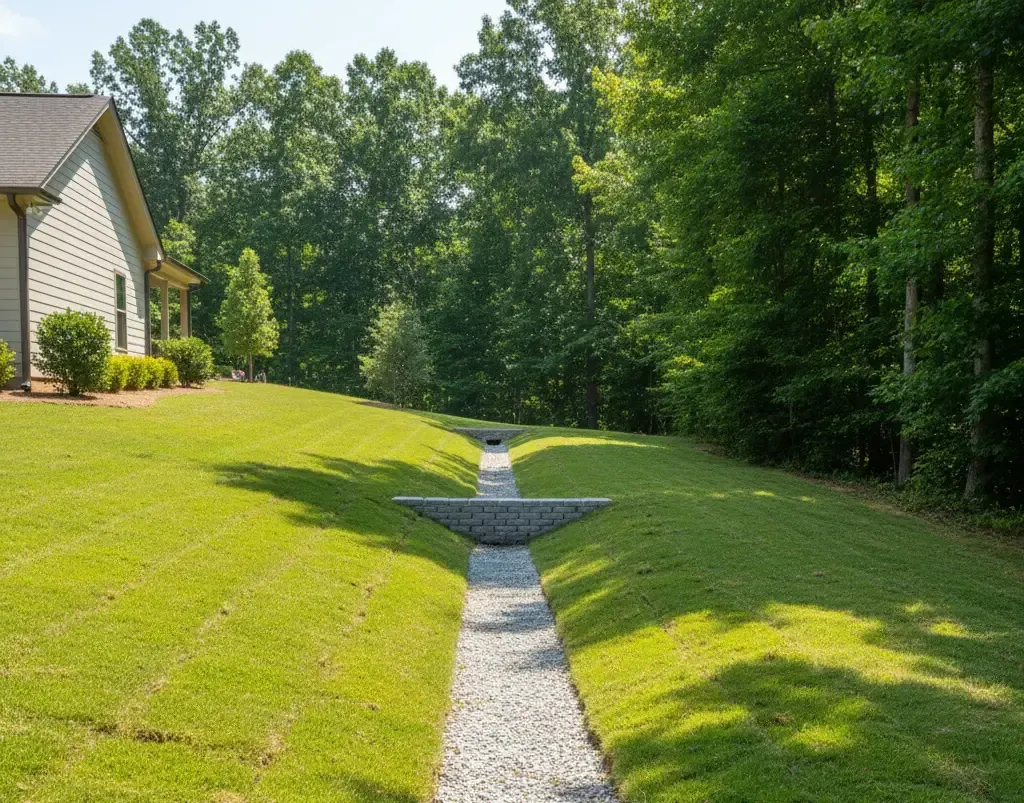
Redirecting Runoff Away from Vulnerable Areas
Keep water off the slope's face. Guide it to safe spots first. This cuts erosion at the source.
Roof water often starts the flow. Extend it far from the base. Pipes or channels work.
Proper Gutter and Downspout Extensions
Gutters catch rain from your house. Downspouts drop it straight down. Extend them 10 feet out with PVC pipe.
Use splash blocks at ends. They spread water gently. Aim toward flat yards or storm drains. In wet areas, connect to a rain barrel.
Check yearly for clogs. Clean leaves to keep flow smooth. This one change protects slopes below.
Permeable Paving Solutions for Access Areas
Paths and drives on slopes shed water fast. Permeable options let it sink in. No big puddles form.
Gravel grids hold stones in place. Water filters through gaps. Permeable pavers snap together like tiles. Decomposed granite packs tight but breathes.
Install over a sand base. Compact it well. Edge with metal strips. These surfaces cut runoff by 70%, says environmental data.
Choose for walkways. They look clean and work.
Grading and Swales: Engineered Water Paths
Grade the slope to steer water. Swales are shallow ditches lined with plants. They carry runoff slow and safe.
Shape them V-like, one foot deep. Line with grass or rocks. Slope them one percent to a drain point.
Outslope away from your house. This keeps foundations dry. Pros use levels for precision.
Add mulch in swales. It slows water more. Direct to curbs or soak pits.
A Proactive Approach to Landscape Longevity
Erosion control mixes plants, walls, and water guides. Each method builds on the last for strong defense. Your sloped yard stays pretty and solid.
Assess your site now. Walk it after rain. Note bare spots or gullies.
Layer solutions for best results. A wall with deep plants works wonders. Tailor to your slope's needs.
Pick what fits your yard. Start small if needed. You'll enjoy a lasting landscape.
Stop Erosion for Good
Schedule a free, on-site assessment with our West Atlanta experts to protect your property.